Welcome to UCLA’s Department of Gender Studies, a leading center for interdisciplinary research and education within the Division of Social Science. As Chair, I am deeply inspired by our department’s exciting history, which I highlight below for two reasons. One: to show that scholarly focus on gender and sexuality has deep roots at UCLA, with some of the preliminary courses dating back to the mid-20th century. As a result, this enduring history necessitates a future that can integrate longstanding traditions to provide a comprehensive and rigorous education in gender and sexuality, one often spurred by student advocacy. Second, our history grounds the department’s faculty in preparing the next generation with patience and care as they face an uncertain future after graduation.
Founded in 1975 as the Women’s Studies program, it emerged amidst the vibrant currents of the 1970s women’s liberation movement and ongoing efforts by students and faculty to support marginalized groups. At the same time, UCLA demonstrated its commitment to queer history and culture by launching its first gay and lesbian literature course in 1976 in the Division of Humanities. The undergraduate minor in LGB studies was approved in 1997 and renamed LGBT Studies in 1998.
In 1999, the Division of Social Science launched the Program in Women’s Studies, which established the first doctoral program in the field, including a graduate program and PhD concentration. In 2008, the program became a department, and in 2012, it renamed itself the Department of Gender Studies to better reflect current research and teaching in the field. Meanwhile, by 2016, the LGBT Studies program had grown significantly and included the nation’s first and longest-running graduate queer studies conference, QGrad. It was then renamed the Lesbian, Gay, Bisexual, Transgender, and Queer Studies Program. To better administer coursing, advising, and programming, the LGBTQS Program and minor were integrated into the Department of Gender Studies in 2025 and retained its long-standing Faculty Advisory Committee, composed of dedicated faculty across UCLA.
As the new department chair, I recognize how this history of achievement and transformation reflects a determined drive to rethink the social implications of categorization, the management of desire, the fostering or foregoing of intimacy, and the inevitability of social struggle in an increasingly complex and rapidly changing world. This is evident in the Department hosting UCLA’s College of Letters and Science’s largest interdisciplinary faculty, with nineteen core members—including three endowed chairs—and fourteen joint faculty members involved in feminist, queer, and critical research across various disciplines and research hubs on campus. In fact, Gender Studies maintains strong ties with our core faculty-administered allied units and centers at UCLA, such as the Barbara Streisand Center for the Study of Women, the American Indian Studies Center, the Center for Critical Internet Studies, the Center on Resilience and Digital Justice, DataX, the Racial Violence Hub, the Chicano Studies Research Center, and the newly minted UCLA Department of Digital Humanities. Our department serves as a center of intellectual activity spanning the diverse disciplines our faculty encompass: Sociology, Cultural Anthropology, Information and Data Studies, History, Performance Studies, American Studies, Political Science, Visual and Media Studies, English, Rhetoric, Education, Geography, and Philosophy.
Our undergraduate program offers courses ranging from theoretical debates in the field to histories of sex work and racial violence, tracing how social homogenization has historically relied on suppressing critical faculties and ‘archaic’ traditions in favor of simplistic solutions to complex problems, as is at times evident in social texts like art, film, performance, literature and the internet. Meanwhile, our graduate program offers training in feminist pedagogy and research, with a keen eye on how knowledge becomes politicized on the basis of gender and sexuality and how that affects individual and collective agency.
As we cross our 50th anniversary on campus, UCLA’s Department of Gender Studies continues its pursuit of academic freedom and excellence, preparing students to critically confront the challenges, complexities, and contradictions of our times.
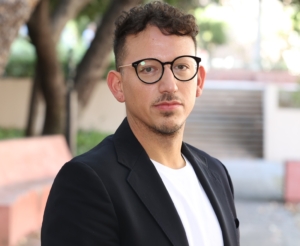
Joshua Javier Guzmán, Chair
If you would like to learn more about Gender Studies at UCLA, please explore this website or email us at info@gender.ucla.edu for more information.